
We are Airstaus. We design and manufacture Venturi valves for laboratory and critical environments from our facility in Toronto, Ontario — founded by people with over 45 years of experience in air control.
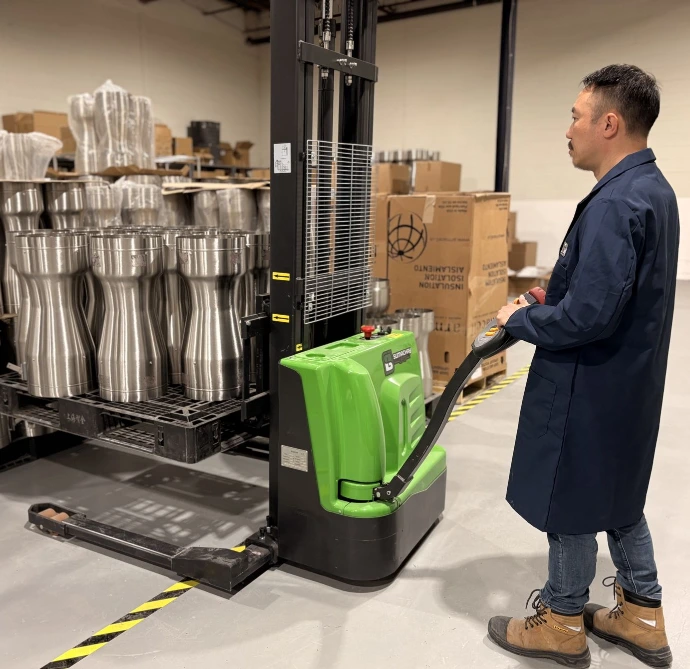
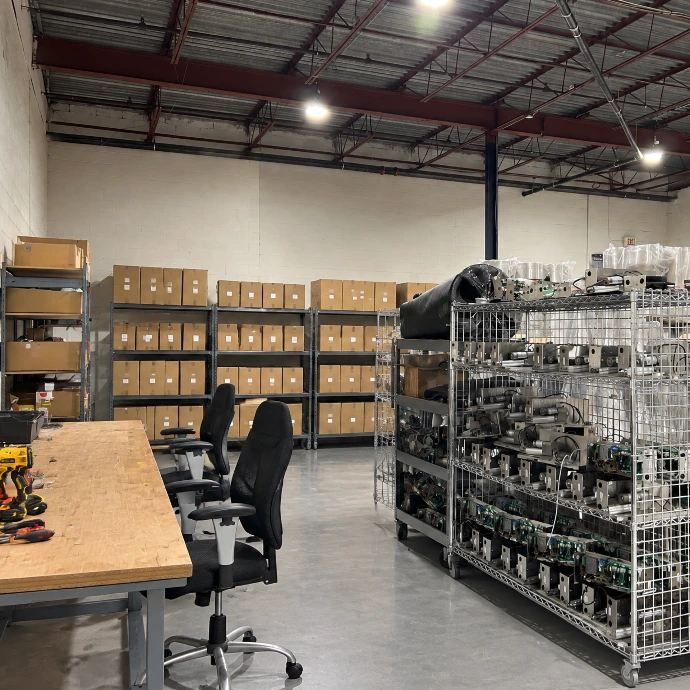
This post opens the door to that facility. Every valve that leaves it passes through four stations before it is installed in a duct. Each step is straightforward on its own; together, they represent a considerable amount of skilled local work.
Station 1:
The valve body
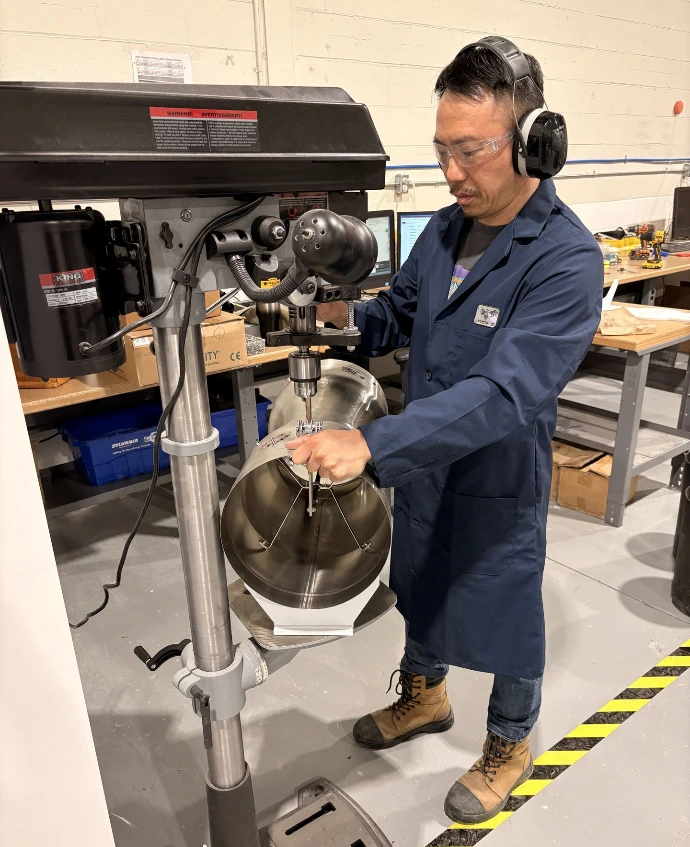
The process begins with the valve body and its moving parts: the shell, the cone, and the arm linkage.
The cone is the central component of the valve. It moves on a shaft inside the shell, and its position determines the airflow: as the cone moves, the opening changes, and so does the volume of air. A spring inside the cone provides pressure independence — as duct pressure rises and falls, the cone adjusts automatically, maintaining the required airflow.
The body is constructed from stainless steel — 304 as standard, with 316 internal components and coated options where the application requires them. Material selection matters because these valves remain in exhaust service for decades, and an unsuitable material in an aggressive airstream becomes a problem years after installation, not on the first day.
Station 2:
The actuator assembly
At the same time, a second assembly is prepared on its own plate: the actuator, together with the controls box and the power supply.
This assembly is responsible for carrying out the building's requirements. The actuator positions the cone as directed by the controls — open, closed, or at any point in between — with a response time of under one second. Because the controls box and power supply are included, what arrives on site is a complete working assembly rather than a set of components to be assembled.
Station 3:
Bringing the two together
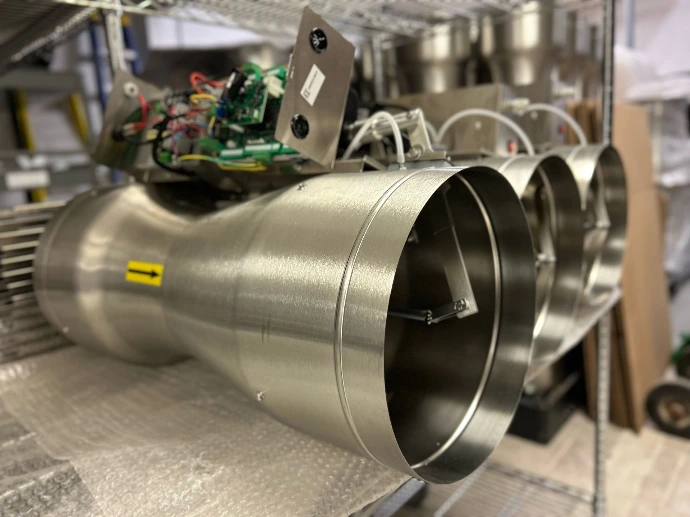
The two assemblies are then combined. The body components are joined, the actuator is connected to the arm linkage, and the unit is wired.
At this point, a collection of parts becomes a functioning valve. The linkage connects the actuator's movement to the cone's position, and the accuracy of that connection determines whether the valve responds consistently and repeatably. Once wiring is complete, the valve is a finished unit, ready for final testing.
Station 4:
Calibrated, tagged, and packed
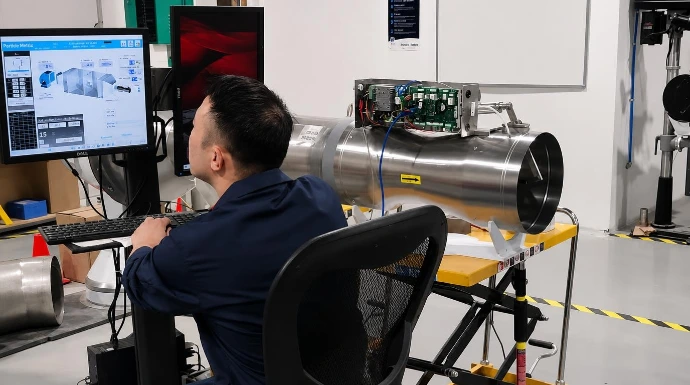
The final station is calibration. Each valve is calibrated for the specific application it was ordered for. It is tested on our airflow station across a range of pressures and flows, and its individual performance curve — the precise relationship between actuator position and delivered airflow — is stored in the valve. No two valves are assumed to be identical, because manufacturing variation means no two ever quite are. This is why the
valve maintains accuracy within ±5% and operates across a wide turndown range: its performance was verified before shipment, not after installation.
After calibration, the valve is tagged for its order and packaged for delivery to site. The tag ensures that the valve built and tested for a given application is the one that arrives there.
What it adds up to
Four stations: assembly, controls, integration, and calibration — all completed in Toronto by the team that supports the valve after installation.
That is what we do, and who we are: a Canadian manufacturer, building and proving every valve before it reaches your building.